Going through the newspapers trying to find snippets of information for this site and the facebook page, I only seem to be able to find sad news reports at the moment. I apologise in advance and will keep looking for some good news about Whittington past!
Commonwealth War Graves week
This week is Commonwealth War Graves week https://www.cwgc.org/our-war-graves-your…/war-graves-week/
I thought it would be a good time to re-visit the lives of some of the Old Whittington men buried in war graves at home and away
There are also 16 war graves in St Bartholomews churchyard at Old Whittington.

STATION LANE
Station Lane Old Whittington then and now.

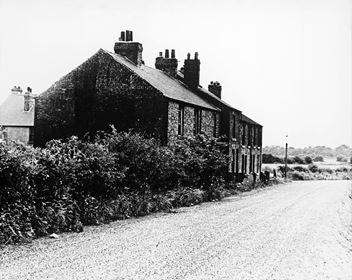


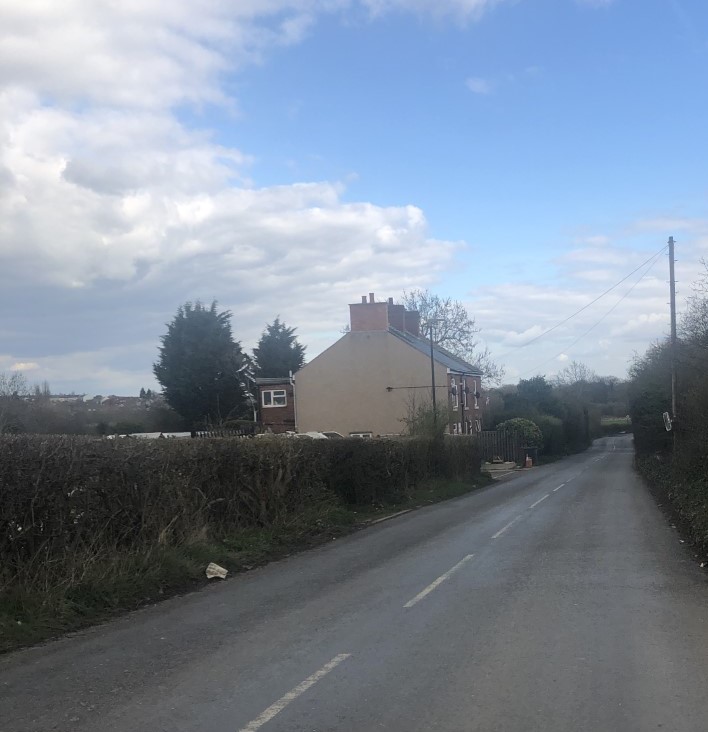
A SALUTARY LESSON
This from the Derbyshire Courier 31 August 1839. A lesson to everyone ‘lured’ by Sir John Barleycorn!

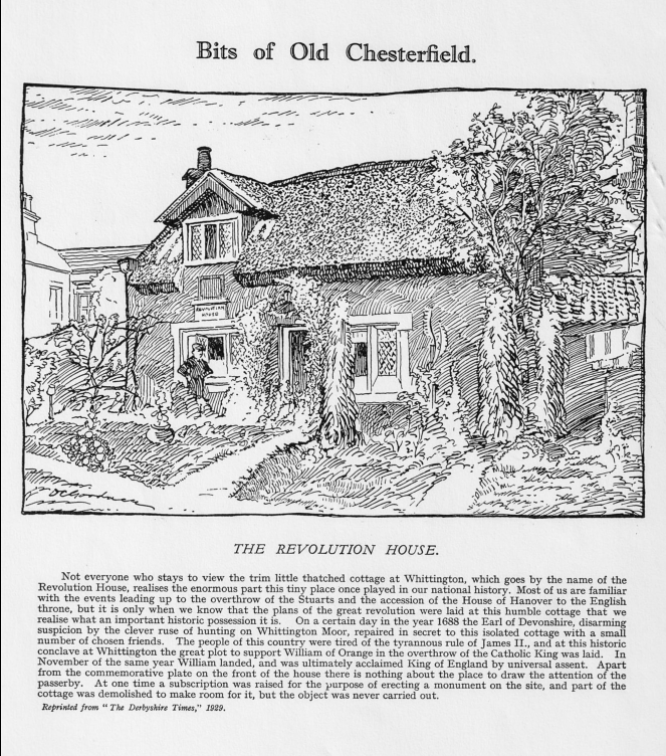
REVOLUTION HOUSE
This was posted yesterday by Andrew Johnson on Chesterfield and Area History and Genealogy facebook page.
It is originally from ‘Bits of Old Chesterfield’ Derbyshire Times 1929.
Ann St John
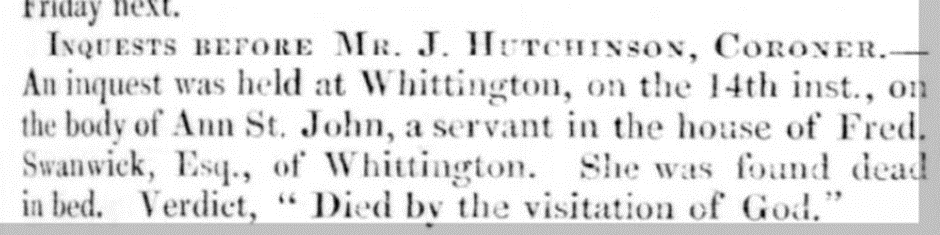
Ann St John worked at Whittington House in the service of Frederick Swanwick. She died during the night of 14th August 1838.
The inquest report from the Derbyshire Courier 18th August 1838 states that Ann died “by the visitation of God”. I have never seen that verdict before.
She was buried the day after she died on August 15th in Old Whittington churchyard and in the burial record there has been written “Received of Charles Grimes the sum of one penny for allowing the remains of his sister Ann St John to be conveyed into the rectory lane for internment” signed by the Curate R Robinson.

I visited her grave today at St Bartholomews the headstone is still there but the wording is a bit faded now.

Pictures of Whittington
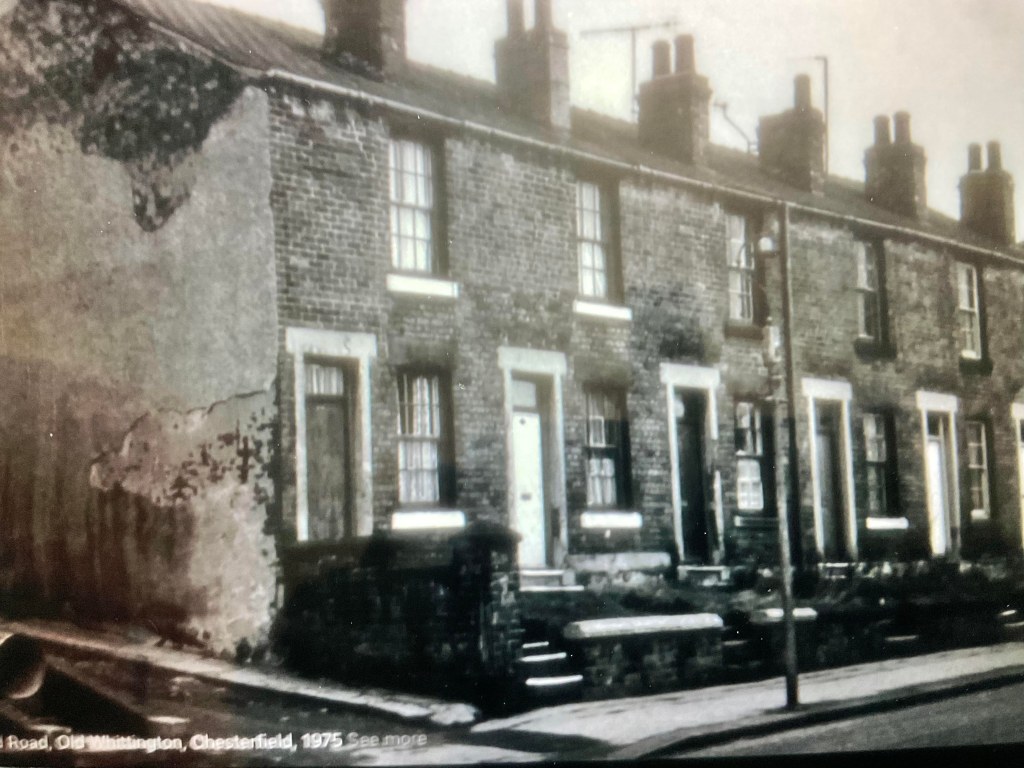
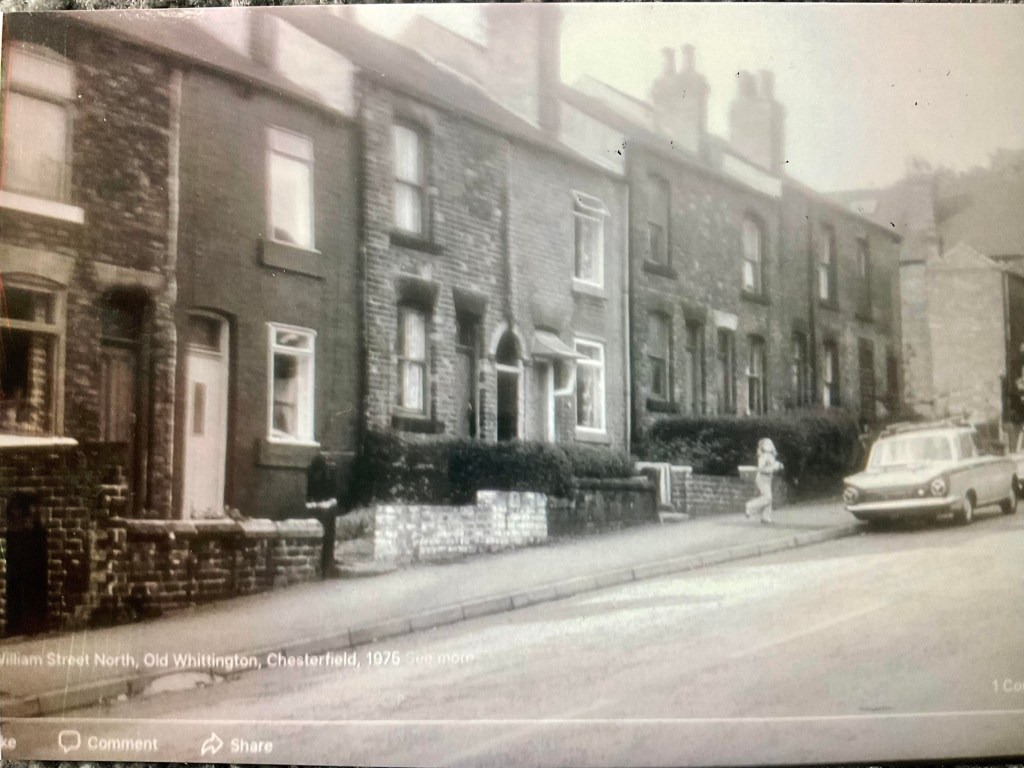
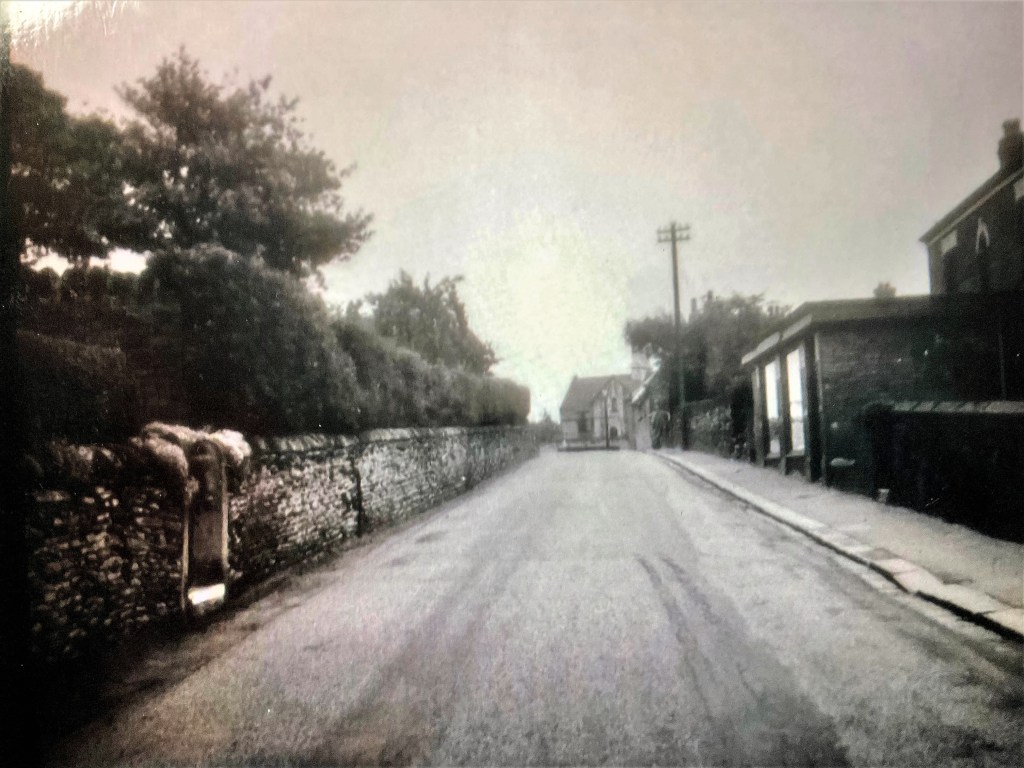
I was sent a selection of Whittington photos by Elizabeth Pemberton dated 1960’s /1970’s ? Broomhill Park area.


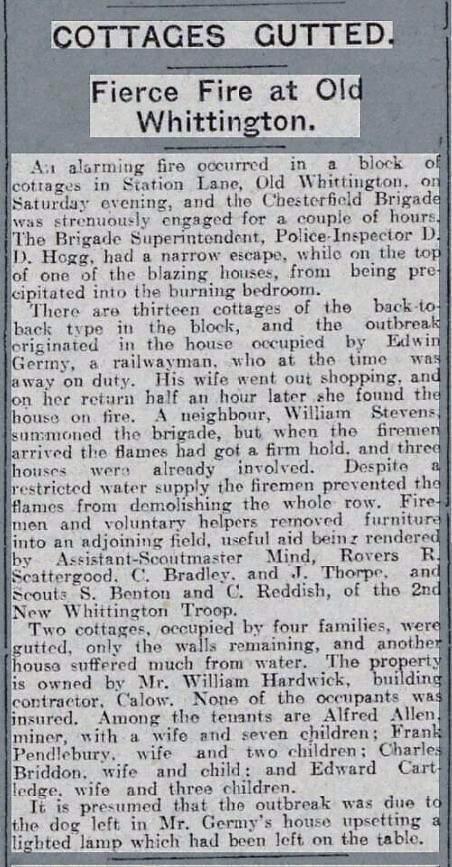
WHITTINGTON FIRE DECEMBER 1926
This article caught my attention from the Sheffield Telegraph 20 December 1926.
The map below from 1909 shows the area of Whittington, Station Lane is highlighted.

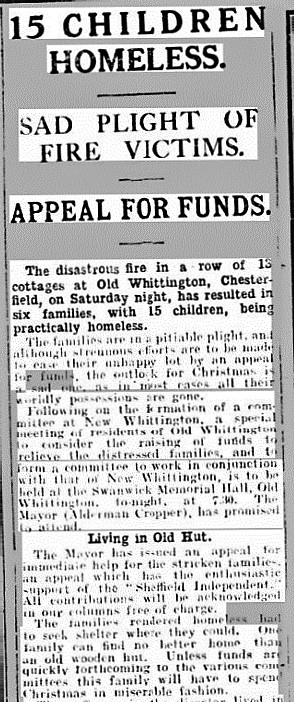
There was then a follow up article in the Sheffield Independent 22nd December 1926. The copy is quite difficult to read and I have transcribed it below.
“15 CHILDREN HOMELESS
SAD PLIGHT OF FIRE VICTIMS
APPEAL FOR FUNDS
The disastrous fire in a row of 13 cottages at Old Whittington, Chetserfield, on Saturday night, has resulted in six families, with 15 children, being practically homeless. The families are in a pitiable plight, and although strenuous efforts are to be made to ease their unhappy lot by an appeal for funds, the outlook for Christmas is a sad one, as in most cases all their worldly possessions are gone. Following on the formation of a committee at New Whittington, a special meeting of residents at Old Whittington to consider the raising of funds to relieve the distressed families and to form a committee to work in conjunction with that of New Whittington, is to be held at the Swanwick Memorial Hall, Old Whittington tonight at 7.30. The Mayor (Alderman Cropper) has promised to attend.
LIVING IN A OLD HUT
The Mayor has issued an appeal for immediate help for the stricken families, an appeal that has the enthusiastic support of the “Sheffield Independent”. All contributions will be acknowledged in our columns free of charge. The families rendered homeless had to seek shelter where they could. One family can find no better home than an old wooden hut. Unless funds are quickly forthcoming to the various committees this family will have to spend Christmas in a miserable fashion. The sufferers in the disaster lived in back to back houses and it now appears (writes our Chesterfield representative) that the tenants of another house, Mr and Mrs T Barker, suffered considerable damage to their furniture and belongings chiefly through water. Mrs Barker stated yesterday that she had just finished cleaning through for Christmas and was looking forward to a convivial time when the fire broke out in Mrs Germy’s cottage.
A Welcome Visitor
Mrs Barker said that while she was thankful that her home had been saved, it was reduced to a piggery and she had suffered considerable loss. The firemen were obliged to deluge her house with water in order to save it, and other men removed all her furniture into an adjoining field. Mrs Eric D Swanwick, of Whittington House, paid a visit yesterday morning to the distressed families and it almost goes without saying that she did not go empty handed. A house – to – house collection is being organised in the Whittingtons for the affected families who are all of the working class type and are not un-naturally anxious to get back into homes of their own.”

Further information on 23rd December 1926 shows that everyone was willing to help the victims of the fire.
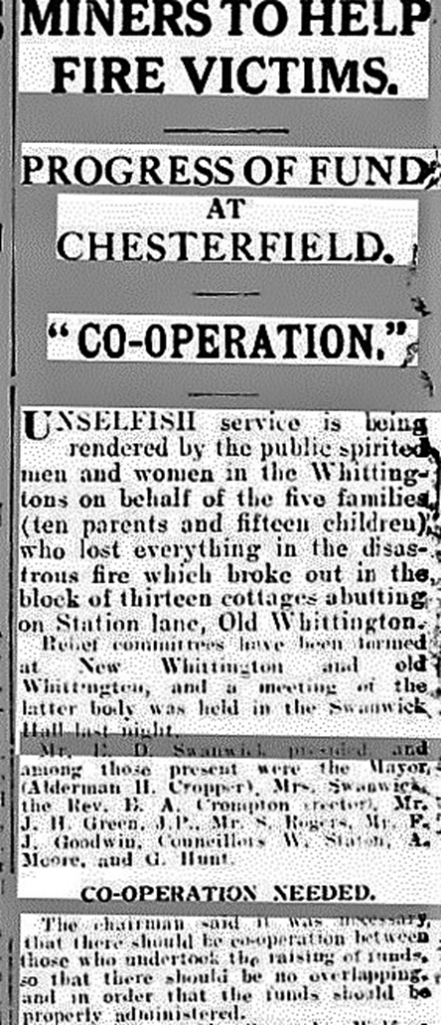
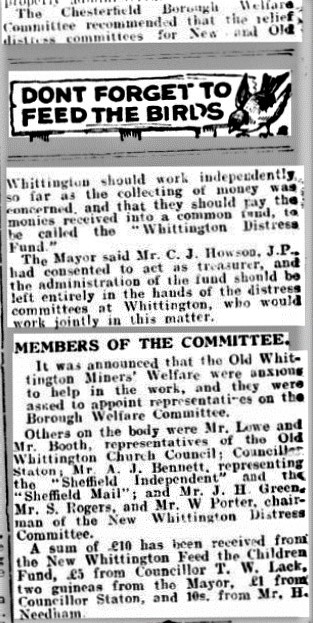
On 24 December 1926 the Chesterfield Mayor (Alderman H Cropper) launched an appeal for the victims of the fire.

By the 1st January 1927 the Sheffield Independent was able to report that the Fire Fund had already collected £24 17s

All newspaper extracts from British Newspaper Archive (https://www.britishnewspaperarchive.co.uk/) accessed 20 Feb 1922
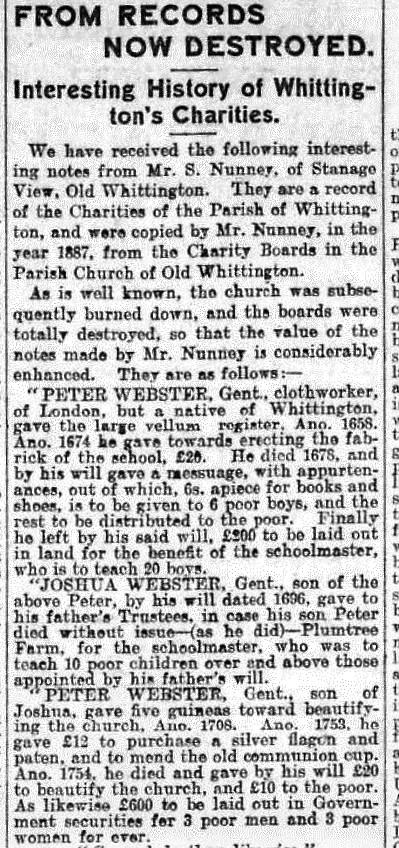
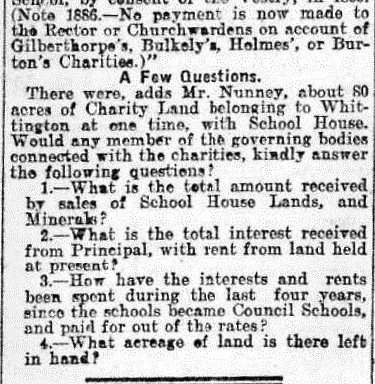
WHITTINGTON CHARITIES
This excerpt taken from Derbyshire Courier March 5th 1910 outlines the details of the Whittington Charities.
The context of the article is really Mr Nunney (https://oldwhittingtonops.com/nunney/) trying to find out what had happened to some of the monies from these charities, but I thought it was interesting to see how many ex Whittington residents left provision for the ‘poor’ of Whittington.

William Hand
Although William wasn’t born in Whittington he lived and worked in the area. He certainly had an interesting and varied life.
According to the 1881 census the address for the Hand family was “near the church” Old Whittington. In 1891 the family had moved to High St and were still there in 1901, by 1911 they were living at Holland Road, but according to the newspaper report of 1914 the couple had moved again and were living at 66 Church St.
As far as I can check without certification William Hands died in 1922.
Hope you find this excerpt from the Belper News 3 April 1914 interesting. Love the fact that at 75 William Hands was still working.


https://www.britishnewspaperarchive.co.uk/ accessed 06/02/22
 Old Whittington One Place Study