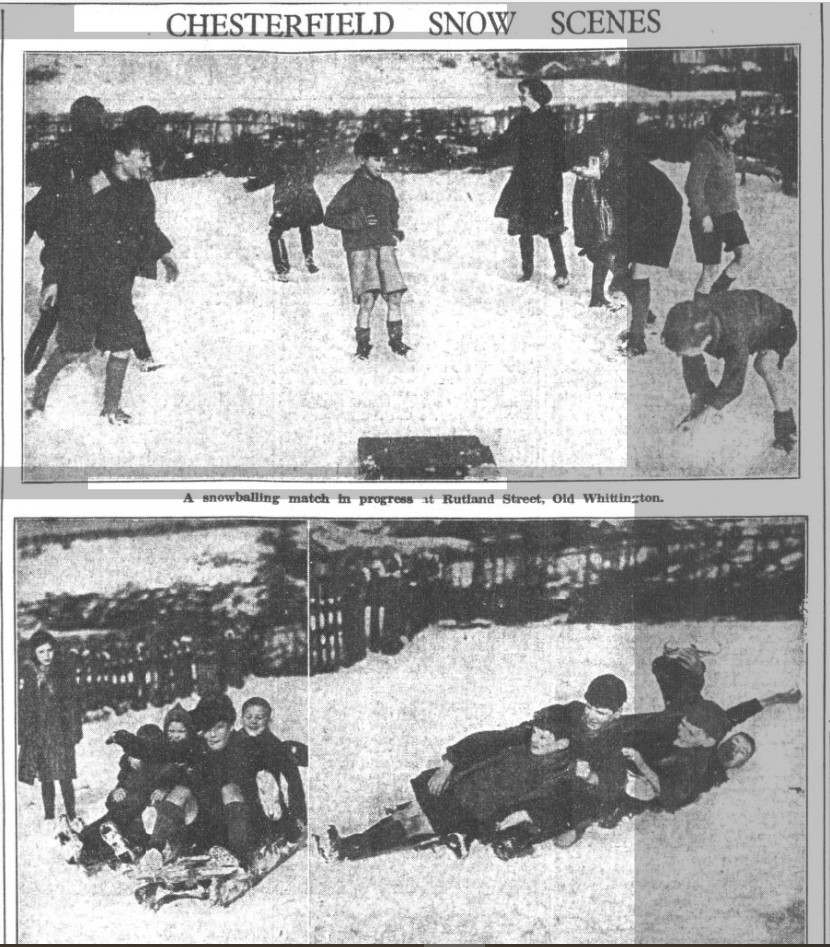
From the Derbyshire Times January 6th 1939. All look to be having great fun.

From the Derbyshire Times January 6th 1939. All look to be having great fun.

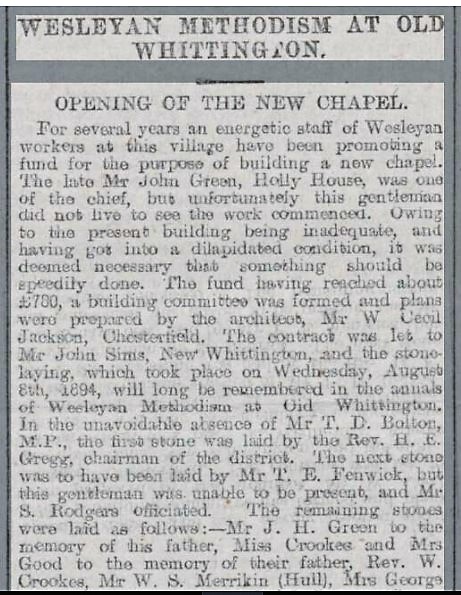
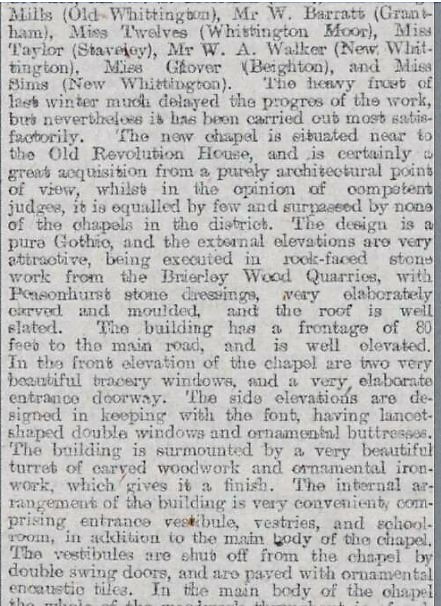
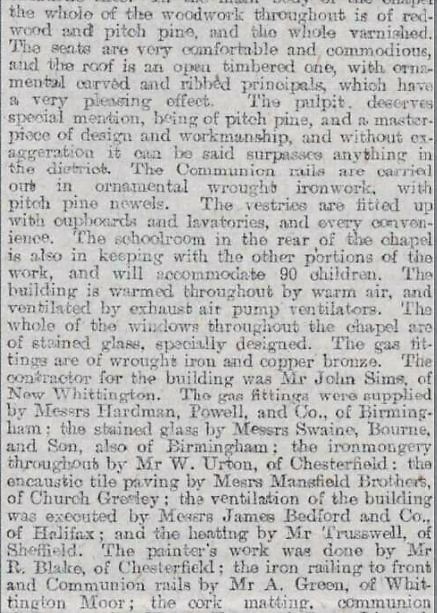
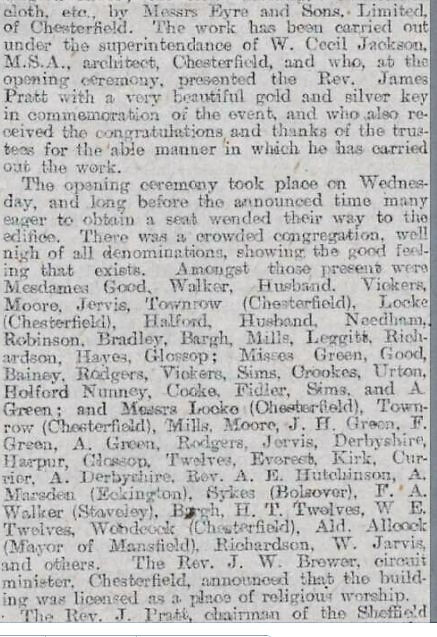
I found this article about the opening of the new Wesleyan chapel at Old Whittington in the Derbyshire Times and Chesterfield Herald 2nd November 1895.
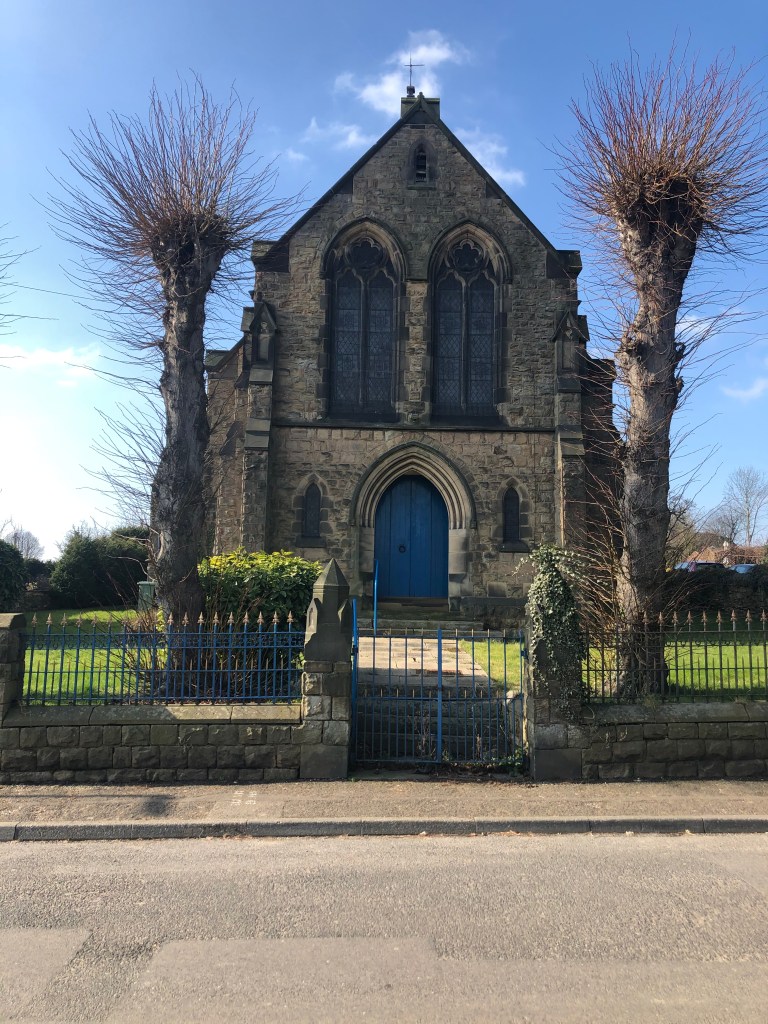
At first I was unsure which chapel it referred to as it mentions it is situated near to the Revolution House, but after a visit to Whittington I realised it is the chapel on Church St. which is now the Seventh Day Adventist church. (There was another chapel just past the Revolution House on the main road).
The newspaper report is interesting for the information on the building of the chapel, but it is also interesting from a genealogical point of view as it contains plenty of names of people who lived in Whittington in the mid 1890’s.


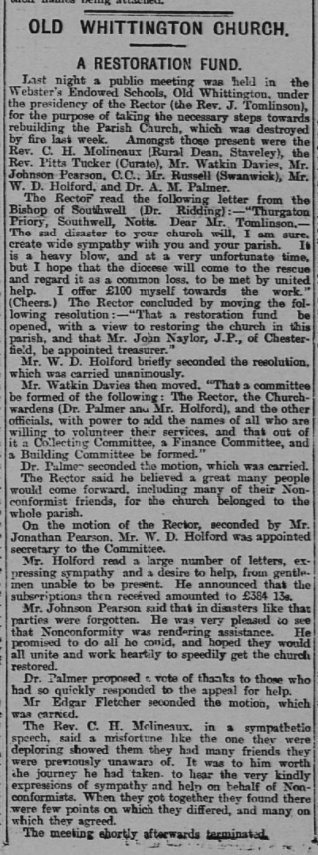
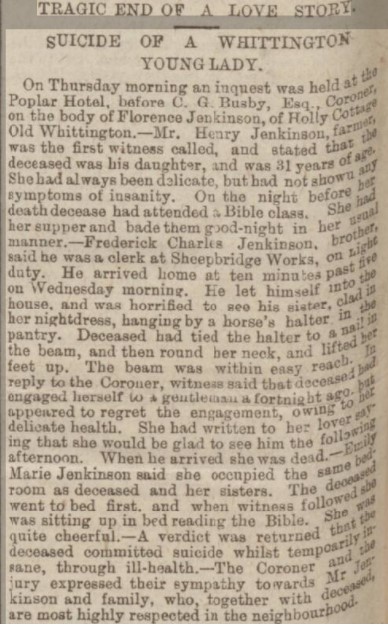
A sad story to start the New Year from the Derbyshire Times and Chesterfield Herald 23rd July 1892.
I don’t normally post sad events that I find in the newspapers but this young lady had a very tragic end to her life due to mismatched love!

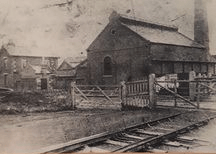
I have been sent a photo by Elizabeth Pemberton of the gas works at the bottom of Whittington Hill clearly showing the managers house, it was taken around 1890 and it not one I have seen before. At this time the manager would have been William D Holford.

When I was researching the soldiers of WW1 I came across John Smitheman https://oldwhittingtonops.com/smitheman-john/ John died in March 1916, but sadly his young daughter Ellen pre-deceased him in February 1916, she was just 4 years old. Whether he would know he had lost his daughter I have no idea, but I was contacted this week by Johns grandson and he sent me a picture of this memorial plaque for both his grandfather and his aunt. They were both obviously greatly missed.

For anyone interested in the history of the Revolution House –
Chesterfield and District Local History Society are having their first talk since before Covid. This will be held at St Thomas’s Church , Brampton , on Monday September 20th at 7- 30pm, and the talk is “The Revolution House “, by Charlotte Mitchell , from Chesterfield Museum.
Visitors are welcome. Parking is free.
It will be in one of the rooms near to the cafe.
I was sorting through some papers and found these postcard copies of paintings by Joseph Syddall (b1864 d 1942). These two paintings were painted between 1890 and 1914, at this time Syddall was dividing his time between Whittington and London. The first called ‘Ploughing’ and the second ‘Beach Scene’. The third image is my favourite. The lady looks deep in thought and she is wearing a lovely big hat, which indicates the drawing may have been done 1890-1910, when big hats were more in fashion.Joseph Syddall was best known in Whittington for his designs of the war memorials at Old Whittington and Dronfield.The last image is the original drawing Syddall did for Old Whittington war memorial. I was lucky enough to be able to photograph it, by kind permission of Chesterfield Museum.Syddall was best known for his pencil drawings and it was pencil drawings that saw him elected to become a member of the Royal Academy.


Having just transcribed the 1841 census for Whittington I thought I would check which occupations were most popular.
I imagined it would be more rural trades but was surprised when I checked that even in 1841 Coal mining just came out on top !

The chart only shows the main employment categories the other occupations were the normal rural trades, miller, blacksmith etc.
There were several collieries in the area some coming later than 1841, but Marrs Whittington Colliery was already in existence at that time as the following newspaper report the Derbyshire Courier 12 February 1842 would confirm.


Whittington Colliery receipt https://www.chesterfield.gov.uk/explore-chesterfield/museum/exhibitions/past-exhibitions/down-the-pit.aspx
This was posted in Old Chesterfield Pics by Alan Taylor. It shows what was the old Blacksmiths shop situated on High St.

There had been several Blacksmiths in Whittington, my Gt Aunts husband Walter Booth was Blacksmith at the White Horse in the 1890’s early 1900’s.
This picture was posted on Old Pics of Whittington Moor by the grandson of Harold Locke. It shows clearly the cottages that stood on the corner of High Street and Church Street. A really good example of how a butchers shop used to look.